
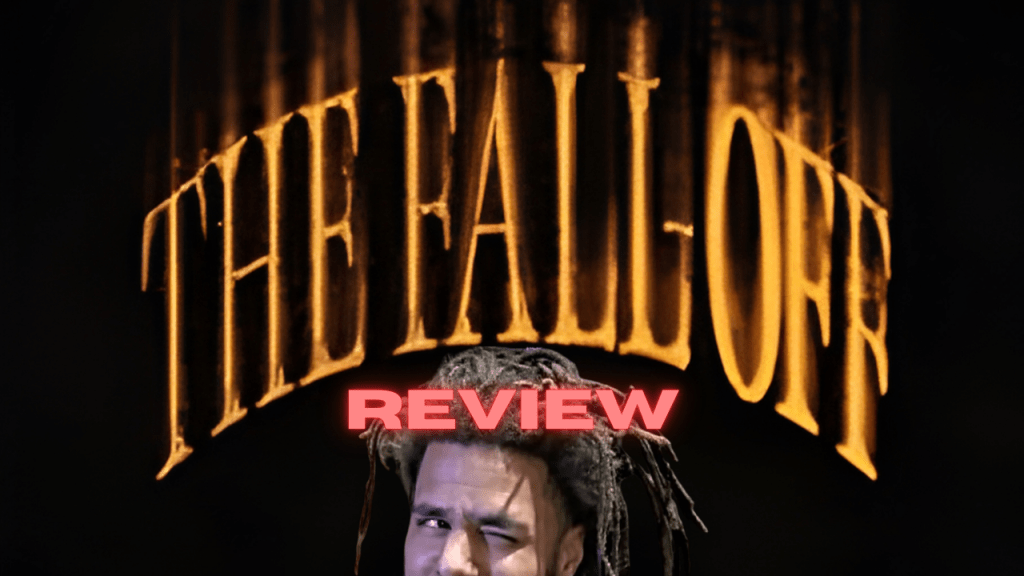
Hip-hop fans have been waiting years for The Fall Off, the long-teased album from J. Cole. For many listeners—myself included—this project carries a lot of emotional weight. Cole has been one of the defining rappers of the blog era and one of the most important voices in hip-hop over the last decade.
So when rumors started circulating that The Fall Off might be his last album, expectations naturally shot through the roof.
As someone who grew up listening to Cole throughout college, I wanted to give this album as many listens as possible before forming an opinion. After sitting with it for a while, one thing becomes clear: The Fall Off has great ideas and strong moments—but the execution doesn’t always match the ambition.
A Risky Double-Disc Format
One of the first things you notice about The Fall Off is that it’s a double-disc album.
Historically, double albums in hip-hop are tricky. For every classic like Life After Death by The Notorious B.I.G., there are far more projects that struggle under their own weight.
That’s partially the case here.
While there are plenty of good tracks across the project, the album often feels like it could have benefited from tighter editing. Instead of a lengthy double album, this might have been stronger as a condensed 16-track release.
Interestingly, the first disc is easily the stronger half of the project.
Standout Tracks From Disc One
The first disc contains several of the album’s best and most engaging moments.
“Two Six” kicks things off with energy and immediately pulls listeners in. It’s one of those tracks that actually gets you hyped—something that isn’t always typical of J. Cole’s introspective style.
Other highlights include:
- “Run a Train” (feat. Future) – A surprising collaboration that works better than expected. Future adds a strong presence to the record.
- “Brunt’s Road Blues” (feat. Future & Tems) – One of the standout tracks sonically.
- “Who the F* Is You?”** – A hard-hitting record with strong lyrical moments.
- “Bombs in the Ville” – Another track that captures Cole’s storytelling energy.
Not every song lands, though. “Lonely at the Top” feels like filler compared to the stronger records around it.
The Album’s Concept: Two Ages of J. Cole
One of the more interesting ideas on The Fall Off is its conceptual structure.
The album includes moments like:
- “29” – representing Cole at 29 years old before moving back to Fayetteville.
- “39” – representing a more mature version of Cole reflecting on life after returning home.
Conceptually, it’s a powerful idea. It explores growth, fame, and the internal struggle of someone who achieved success but still longs for a simpler life.
The problem isn’t the concept.
The problem is the execution.
Strong Rapping, But Repetitive Production
From a lyrical standpoint, Cole is still Cole. His rapping ability is never in question.
However, one critique that comes up repeatedly across the album is the similarity in production.
Despite contributions from respected producers like:
- T-Minus
- The Alchemist
- J. Cole himself
many tracks share a similar sonic feel. The beats aren’t identical, but they create the same overall mood across much of the album.
Because of this, the project can start to blur together after extended listening.
Homage vs. Originality
Another interesting element of The Fall Off is Cole’s decision to pay homage to classic hip-hop songs and artists.
For example:
- “Safety” echoes the concept of “One Love” by Nas, with a storytelling format centered around communication with a friend.
- “The Fall Off Is Inevitable” references the concept behind “Rewind” by Nas.
- “Man Up Above” flips J-Lo’s “Jenny From the Block” and “Never Would’ve Made It” (LOL)
These tributes aren’t necessarily bad—they show respect for hip-hop history.
But when you directly reference legendary songs, the comparison becomes unavoidable. In some cases, the new versions don’t quite reach the level of the originals.
And that’s surprising because Cole has always been one of the most original voices in modern hip-hop.
Features and Collaborations
The album also includes some unexpected collaborations.
One standout moment is Cole bringing in North Carolina legend Petey Pablo for a regional moment that pays homage to the state.
Another highlight is his collaboration with Erykah Badu, where Cole explores a creative concept about hip-hop as if it were a romantic relationship. It’s an idea other artists have explored before, but Cole executes it with strong lyricism.
The Missing Element: Celebration
If The Fall Off truly is J. Cole’s final album, one thing feels noticeably absent.
Celebration.
Cole has been one of the elite rappers of the last decade, often mentioned alongside:
- Drake
- Kendrick Lamar
That “Big Three” era defined modern hip-hop. Even with the drama surrounding recent rap beefs, Cole’s legacy as one of the best lyricists of his generation is secure.
But instead of celebrating that journey, The Fall Off often leans into a melancholy tone. Many songs feel introspective and heavy rather than triumphant.
For a potential farewell album, it doesn’t quite feel like the victory lap fans might have expected.
Final Thoughts
The Fall Off is far from a bad album.
There are strong songs, thoughtful concepts, and plenty of moments where J. Cole reminds listeners why he’s one of the best rappers of his era.
But compared to some of his previous releases like:
- 2014 Forest Hills Drive
- KOD
- The Off-Season
this album doesn’t quite bring creativity, production, and execution together at the same peak level.
Still, even an imperfect J. Cole album is better than most.
Final Score: 7.1 – 7.3 / 10
If this truly is Cole’s final project, it’s a reflective ending rather than a triumphant one. But hopefully, this isn’t the last time we hear new music from him.
What did you think about The Fall Off?
Did J. Cole deliver the farewell album you expected? Let us know in the comments.


 Nobodyz Opinion
Leave a comment