
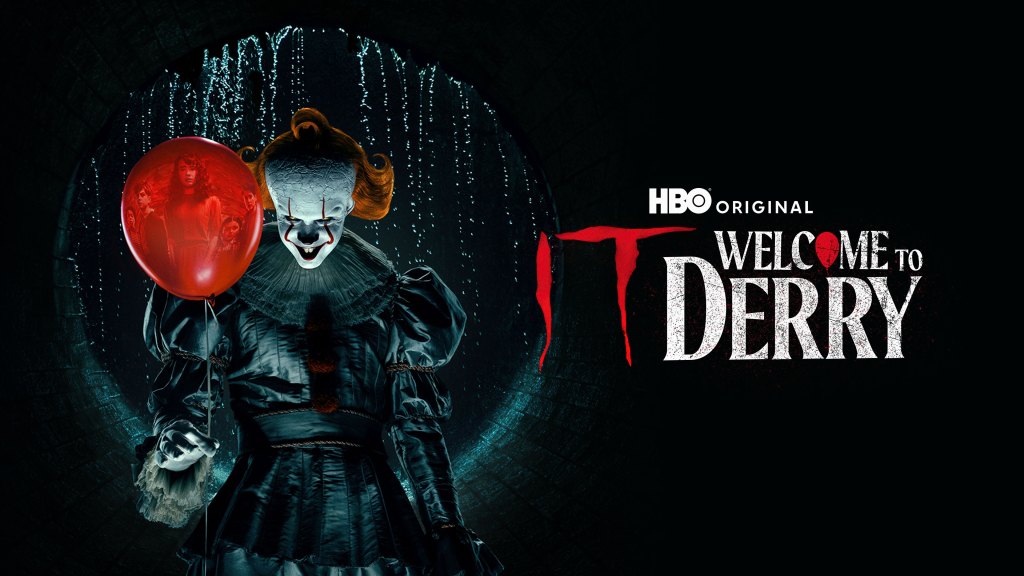
Welcome to Derry is not just a prequel to It—it is one of the most compelling television series of the year, regardless of genre. Streaming now on HBO Max, the series expands Stephen King’s universe in a way that feels both respectful to the source material and bold enough to stand on its own.
Based on King’s iconic novel It, Welcome to Derry explores the origins of Pennywise while digging deep into the social, political, and emotional trauma embedded in the town itself. What emerges is a chilling, layered series that blends supernatural horror with historical realism—and it works exceptionally well.
A Deeper Look Into Pennywise’s Origins
Yes, Pennywise is everywhere in this series, but not always in the form audiences expect. One of the biggest surprises is the return of Bill Skarsgård, reprising his role from the It films. It is rare to see an actor return for a television prequel after leading major feature films, but Skarsgård’s presence adds instant credibility and continuity to the series.
Importantly, Pennywise is not confined to the image of a clown. The show smartly leans into the idea that Pennywise is a shape-shifting embodiment of fear, making his appearances unpredictable and deeply unsettling.
Episode One Sets the Tone—and Pulls No Punches
The opening episode introduces Maddie Clements, a child from a neglected, impoverished background who clearly feels unwanted and unseen. His decision to hitchhike rather than return home becomes the catalyst for a shocking chain of events.
Just when viewers think they have identified the show’s central group of child protagonists, the series flips expectations on their head. Characters you assume are “safe” are anything but. This narrative boldness immediately establishes Welcome to Derry as a series willing to take risks—something modern television often avoids.
Children Carry the Series—and Pay the Price
Unlike many horror shows where children exist on the periphery, the kids are the backbone of Welcome to Derry. They carry the emotional weight, the fear, and the consequences of Pennywise’s presence.
What makes this series stand out is its willingness to do what most shows won’t:
children die. Not for shock value, but to reinforce the stakes. Loss is real. Attachment is dangerous. And no character—young or old—is protected by plot armor.
This creative decision makes every episode tense. When you grow attached to a character, the series reminds you that attachment comes with risk.
A Horror Series Grounded in Social and Historical Reality
Set primarily in the 1960s, Welcome to Derry layers its supernatural horror over very real societal issues:
- Racism within the U.S. military
- Racial tension in a small New Hampshire town
- Civil rights activism
- Class divides and economic hardship
- Childhood trauma and neglect
One standout storyline involves Charlotte Hanlon, a former civil rights activist and wife of Army serviceman Leroy Hanlon. When a local man is framed for a crime he did not commit, Charlotte’s past activism resurfaces, grounding the horror in the lived reality of systemic injustice.
These themes are not background noise—they are integral to the narrative, reinforcing Stephen King’s long-standing belief that true horror begins with humanity.
Multiple Storylines, One Cursed Town
The series balances a large ensemble cast with impressive control. Each episode explores different corners of Derry’s dark history, including:
Dick Halloran’s Psychic Backstory
Dick Halloran, a familiar name to Stephen King fans, is portrayed as a psychic who can see and hear the dead. His struggles with alcoholism, trauma, and repression are explored with surprising nuance, giving context to his self-destructive behavior.
Native American History and Stolen Land
The show also delves into the experiences of the Native American population in Derry, revealing how Pennywise existed long before the town itself—and how the spirit has fed on cycles of violence, displacement, and suffering.
This historical approach makes Pennywise feel less like a monster and more like a permanent infection embedded in the town’s foundation.
Writing, Direction, and Performances Are Top-Tier
From a technical standpoint, Welcome to Derry is exceptionally well executed:
- Sharp, purposeful writing
- Strong child performances across the board
- Cinematic direction
- Consistent pacing
- High production value
There is never a moment where dialogue feels lazy or scenes feel unnecessary. Every episode advances character, theme, or mythology.
The Only Weak Spot: Special Effects
The sole criticism lies in the special effects, which occasionally fall short of the show’s otherwise premium presentation. While never distracting enough to derail the story, they are noticeably weaker than the writing and performances.
A Perfect Bridge to the Stephen King Universe
The finale smartly positions Welcome to Derry as both:
- A standalone series
- A narrative bridge leading into the It films
Whether viewers choose to revisit the original movies or move directly into Season 2, the series functions seamlessly either way.
Speaking of Season 2: the show is set to travel further back in time, reportedly exploring the 1940s or even the 1930s, promising an even deeper dive into Derry’s cursed history.
Final Verdict: One of the Biggest Surprises of the Year
Welcome to Derry is the rare horror series that succeeds on every level that matters. It is scary, emotional, socially aware, and narratively ambitious. Rather than assigning a numerical score, this is a series best described with a simple directive:
Go watch it.
If you love horror, this is essential viewing.
If you don’t usually enjoy horror, this series may still win you over through its characters, themes, and storytelling depth.
Welcome to Derry is not just good—it is one of the best TV series of the year.
Have you watched Welcome to Derry yet?
Let us know your thoughts and stay locked in for more unfiltered reviews from Nobodyz Opinion.


 Nobodyz Opinion
Leave a comment